From Silence to Synergy: The Evolving Partnership Between the Mycetoma Research Centre and Médecins Sans Frontières Belgium
Prof. Ahmed Hassan Fahal
The Mycetoma Research Centre, University of Khartoum
The relationship between the Mycetoma Research Centre (MRC) at the University of Khartoum and Médecins Sans Frontières (MSF) Belgium represents a compelling journey of global health diplomacy, one that evolved from early institutional hesitation into a vital humanitarian partnership amid national crisis.
The Historical Pivot: From Geneva 2013 to London 2024
The initial contact between the two organisations dates back to February 1, 2013, during an informal mycetoma consultation meeting organised by the Drugs for Neglected Diseases initiative (DNDi) in Geneva. At the time, an invited MSF representative expressed sincere apologies, explaining that mycetoma fell outside MSF’s prioritised medical mandate. Because MSF traditionally focuses on acute emergency response, epidemic control, and immediate life-threatening trauma, chronic subcutaneous fungal infections like mycetoma were not classified as high-priority operational targets.
For over a decade, formal communication remained largely dormant. A major turning point occurred in 2024, when Prof. Ahmed Fahal was invited as a keynote speaker at the MSF Scientific Days in London. This platform provided a critical forum to present the devastating clinical and socioeconomic realities of mycetoma directly to MSF’s global leadership, clinical researchers, and operational managers, reigniting institutional dialogue on an international stage.
During his presentation, he highlighted the landmark success of the first-ever double-blind, randomised clinical trial for mycetoma treatment, a monumental achievement accomplished within an underserved setting, navigating severe medical, infrastructural, and socioeconomic constraints. By rigorously evaluating novel therapeutic regimens in an endemic region, the trial showed that high-standard, GCP-compliant clinical research can be executed under extreme resource limitations. This groundbreaking study not only provided robust evidence to transform clinical management guidelines for eumycetoma, but it also established a reproducible operational framework for conducting gold-standard clinical trials on neglected tropical diseases across low-resource global health settings.
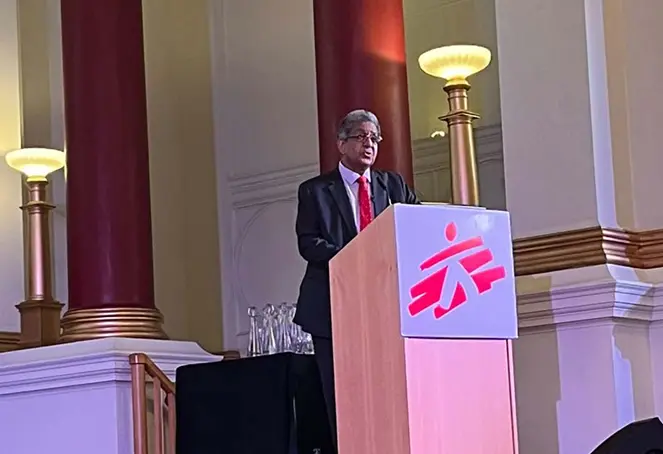
The MSF Scientific Days in London, 2024.
Academic Dissemination & Strategic Networking
Prof. Fahal’s presentation at MSF Scientific Days 2024 highlighted the severe disease burden in endemic rural communities and showcased the MRC’s pioneering clinical and educational research:
- Global Archiving & Dissemination: Recognising the clinical significance of the work, the MSF Scientific Days Team formally archived Prof. Fahal’s presentation on the permanent MSF Science Portal and event platform, making it accessible to MSF field operations globally.
- Institutional Bridge-Building: The London conference served as a vital bridge to broader international medical networks. Following the presentation, Mai Seida from the Global Affairs Department of the Royal College of Surgeons of England reached out to establish collaboration, inviting MRC participation in the Global Surgical Frontiers conference and exploring international surgical partnerships.
During his visit to London, Prof. Fahal met with senior leadership at the MSF office to explore future strategic collaborations. Despite mycetoma falling outside MSF’s standard priority mandate, the discussions focused on developing vital support mechanisms for mycetoma care amid the ongoing conflict in Sudan.
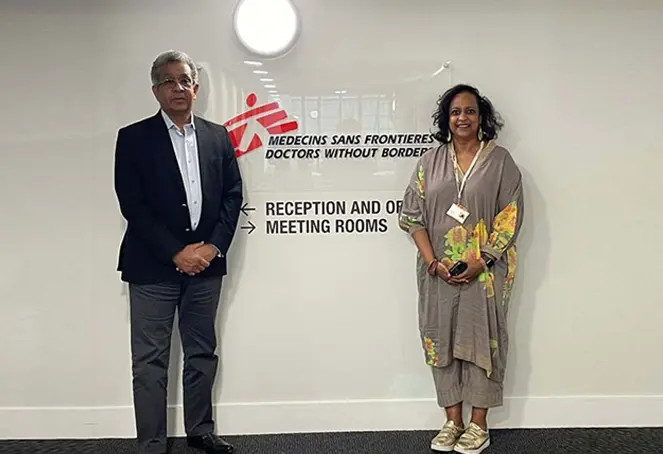
Visiting MSF London Office
Joint Advocacy: Responding to Institutional Destruction
Following the devastating physical destruction and looting of the Mycetoma Research Centre in Khartoum during the armed conflict in Sudan, a major crisis emerged. Beyond the physical structure, millions of dollars worth of diagnostic equipment, irreplaceable research databases, and decades of biobank specimens were lost or compromised. Recognising that this catastrophe had received minimal international media coverage, MSF UK mobilised to amplify the situation:
- Unified Action: Dr Holly Baker, Research Uptake Adviser at the Manson Unit, MSF UK, liaised with Dr Borna Nyaoke, Head of Mycetoma Disease Programme at DNDi, and began coordinating an international advocacy strategy.
- Tripartite Medical Commentary: Prof. Fahal, MSF UK, and DNDi agreed to co-author a high-impact joint commentary/correspondence piece in a leading peer-reviewed medical journal. By uniting the voices of the MRC, DNDi, and MSF, the piece leverages collective institutional weight to demand global attention, advocate for health infrastructure protection, and mobilise resources for rebuilding the MRC.
Operational Hurdles & Technical Planning
Translating academic goodwill and advocacy into concrete on-the-ground support required overcoming complex administrative and operational hurdles. MRC leadership and MSF, led by Dr Jean Paul and the medical team in Brussels, suggested a structured two-stream planning framework:
- Operational Stream: Navigating complex federal and state administrative procedures, security protocols, and customs clearances. Operations were coordinated virtually while Prof. Fahal was in Cairo, working directly with the MSF Head of Mission in Khartoum to establish lawful supply lines and staff safety protocols.
- Technical & Clinical Stream: Engaging with MSF medical specialists in Brussels to standardise field diagnostic protocols, laboratory testing support, modified drug administration guidelines, and long-term follow-up care for displaced patients.
Initial Obstacles: Despite MSF’s deep concern over mycetoma patients losing access to free care and the tragic loss of biological material, field implementation faced delays. Sudan was simultaneously grappling with acute public health emergencies, forcing MSF operational teams on the ground to prioritise immediate life-saving responses to severe outbreaks of cholera, malaria, dengue fever, and epidemic diarrheal diseases.
Breakthrough in Port Sudan and On-the-Ground Impact
Persisting through these structural and priority barriers, Prof. Fahal met directly with HE Aline Serein, MSF Country Coordinator in Port Sudan. During this high-level meeting, he delivered a comprehensive presentation detailing the extent of the MRC’s physical damage, the dispersal of vulnerable patients, and the urgent need for therapeutic continuity. While high-level international approvals were being processed, this direct engagement marked the definitive turning point for field-level operations. She pledged her full support for both the patients and the MRC, with initial plans set to launch the support programme in January 2026. However, subsequent administrative restructuring at MSF headquarters and shifting organisational policies introduced further delays, pushing implementation to September 2026.
MSF Belgium and Mycetoma Research Center Strategic Partnership
On August 17, 2026, a high-level delegation from MSF Belgium, led by Dr Thotho Kolombo, Country Medical Coordinator, and Dr Elsadig Ahmed, Deputy Country Medical Coordinator, conducted an official institutional visit to the MRC to finalise a comprehensive collaborative partnership for mycetoma patient care across Sudan. They discussed a strategic alliance comprises key operational components that work together to revolutionise care: it establishes a sustained supply line for high-cost antifungal and antibacterial therapies to ensure free, uninterrupted, long-term treatment and prevent abandonment; delivers an immediate supply of specialised surgical consumables, moisture-retentive wound dressings, sterile bandages, and antiseptics to manage complex lesions, sinus tracts, and secondary bacterial infections; extends financial and logistical backing to MRC clinical, nursing, laboratory, and field epidemiology personnel to maintain continuous outpatient care, diagnostics, and community outreach; integrates MSF’s rural distribution network and mobile clinical units with the MRC’s Point-of-Care Ultrasonography protocols to enable rapid bedside detection and early referral in remote endemic villages; and ultimately unites MSF’s humanitarian field capabilities with the MRC’s scientific authority as a WHO Collaborating Centre to prevent avoidable amputations, reduce patient disability, and establish a scalable model for neglected tropical disease management across Africa.
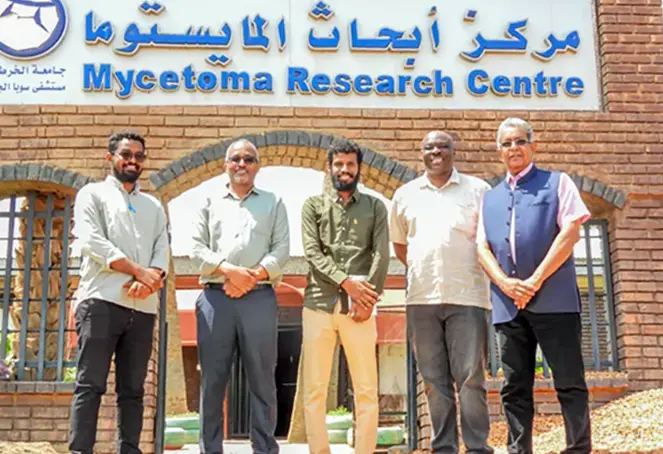
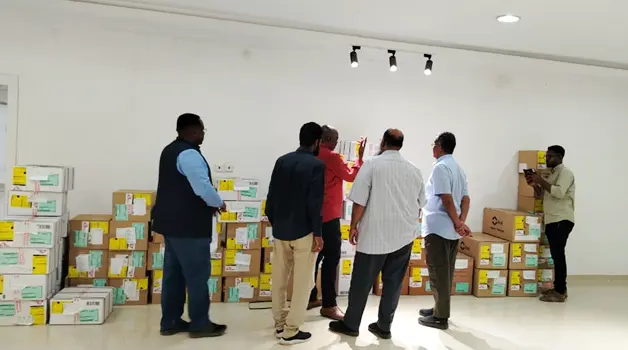
MSF high delegates visiting the MRC
In September 2026, MSF delivered the first consignment of essential antifungal and antibacterial medications for mycetoma management, which were immediately dispensed to patients at the Mycetoma Research Centre. This timely intervention marked a profound operational turning point, directly alleviating severe systemic barriers for underprivileged patients who routinely undertake long, costly journeys from remote rural regions, only to return home empty-handed due to critical drug shortages. By eliminating prohibitive out-of-pocket pharmaceutical costs, this reliable supply line has significantly curbed the alarming rates of care default and loss to follow-up, ultimately preventing advanced disease progression and sparing countless vulnerable individuals from catastrophic, preventable limb amputations.
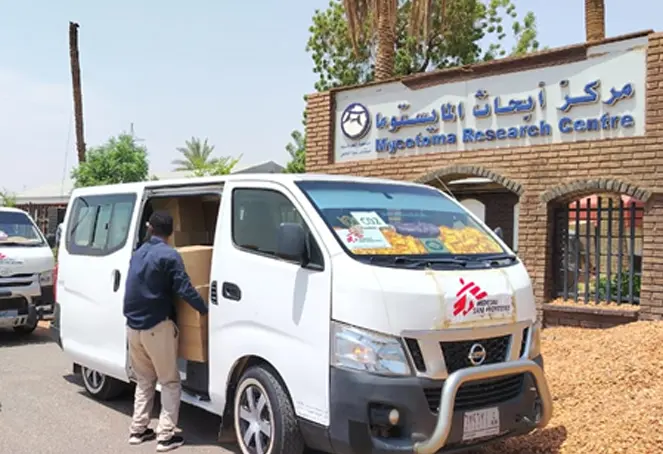
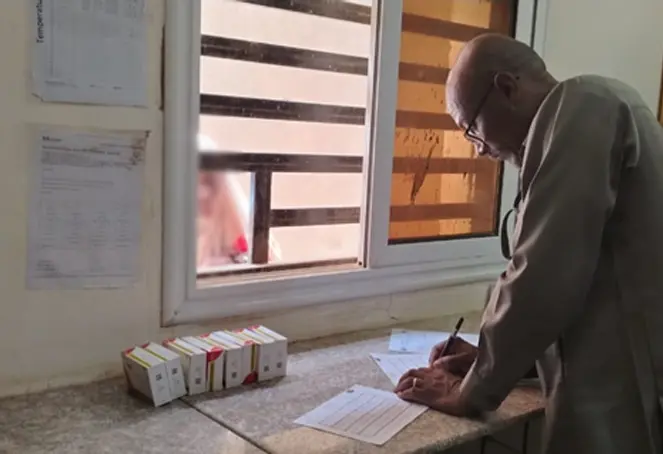
Arrival and dispensing of the MFS medication at MRC
Direct Outcome:
Through years of persistent multi-institutional advocacy, strategic negotiations, and unwavering engagement, the Mycetoma Research Centre secured a substantial, sustainable consignment of essential antifungal therapies, including high-cost agents like itraconazole, and broad-spectrum antibacterial regimens through its partnership with Médecins Sans Frontières Belgium. Delivered directly to patients in September 2026, this vital milestone reinstated free, life-saving medical care for vulnerable patients with eumycetoma and actinomycetoma across Sudan. By guaranteeing an uninterrupted pharmaceutical pipeline amid severe ongoing conflict, physical facility destruction, and widespread socioeconomic collapse, this critical intervention has fundamentally halted forced treatment abandonment, drastically reduced preventable limb amputations, and preserved essential healthcare continuity for endemic, hard-to-reach communities.